
Holy Week in Malaga 2027, from March 21st to March 28th, is one of the most iconic religious and cultural celebrations in Spain.
In this complete guide you will find dates, itineraries and practical tips to fully enjoy the processions and traditions that fill Malaga’s streets with art, devotion and emotion. All explained by a local from Malaga deeply passionate about his city and its Holy Week.
Holy Week in Malaga is not just something you watch — it is something you experience. It is a unique blend of art, faith and popular tradition that completely transforms the city.
Below you will find ALL SECTIONS OF THIS GUIDE IN THE TABLE OF CONTENTS.
Dates and Official Program of Holy Week in Malaga 2027
Holy Week in Malaga 2027 takes place from Sunday, March 21st to Sunday, March 28th, marking the most important religious and cultural event in the city’s annual calendar.
Here are the key dates of the main processions:
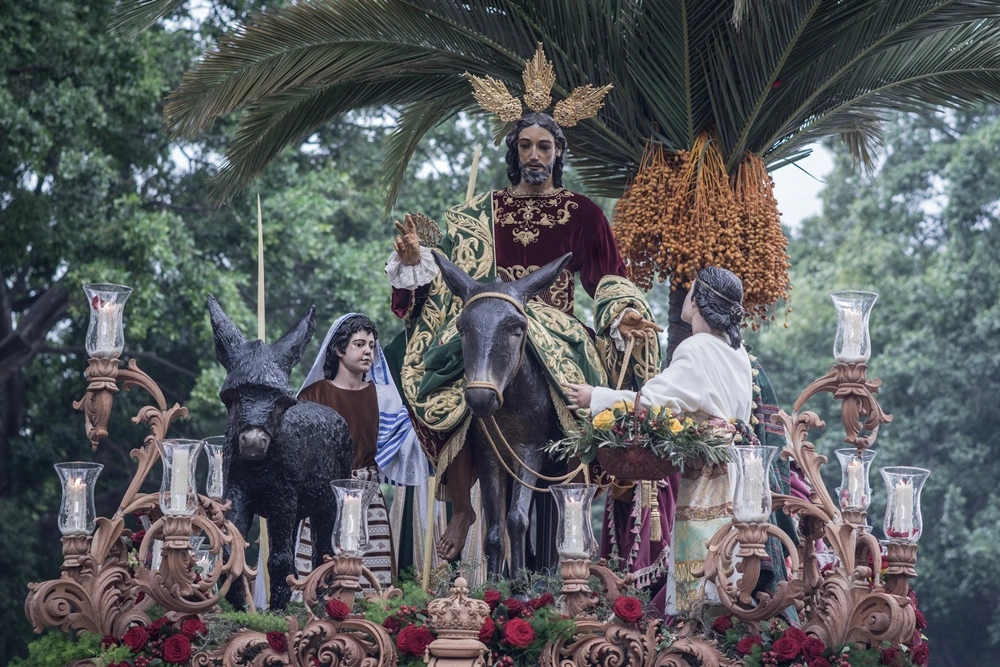
- Palm Sunday (March 21): The official start of Holy Week with the traditional procession of La Pollinica.
- Holy Monday (March 22): Iconic processions such as El Cautivo, one of the most popular in Malaga.
- Holy Tuesday (March 23): Highlights include El Rocío, also known as “The Bride of Malaga”.
- Holy Wednesday (March 24): Deeply solemn night processions, including La Expiración.
- Holy Thursday (March 25): One of the most important days, featuring the Spanish Legion landing and parade and the procession of Our Lady of Hope.
- Good Friday (March 26): The most solemn day, with processions such as The Holy Sepulchre.
- Holy Saturday (March 27): A day of reflection with no official processions.
- Easter Sunday (March 28): The grand finale with the procession of The Risen Christ.
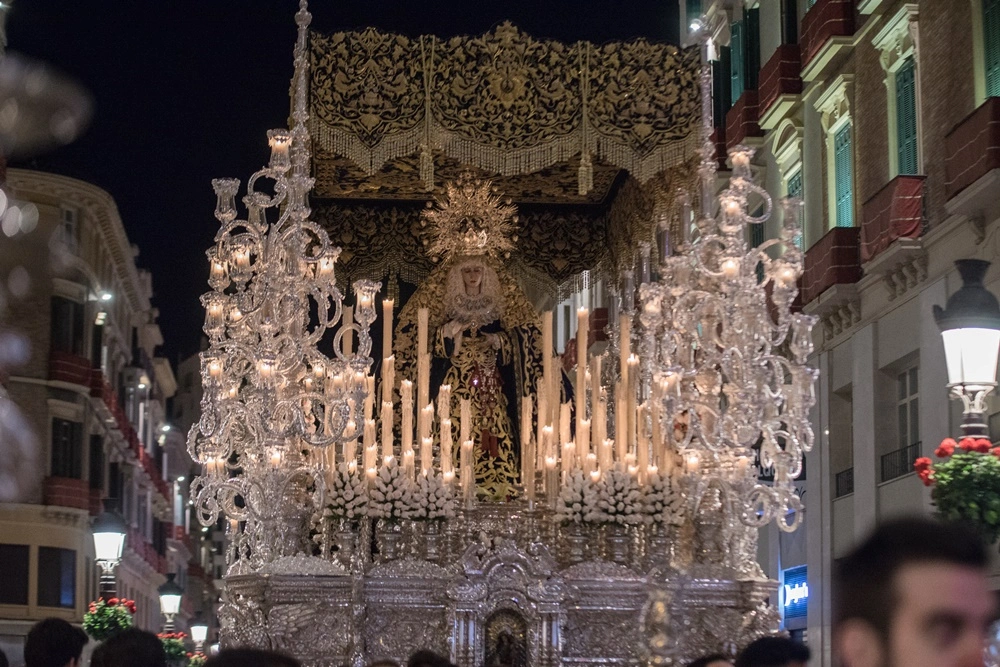
Holy Week in Malaga 2027 Procession Routes and Timetables
From Palm Sunday to Easter Sunday (except Holy Saturday), Malaga’s streets are filled with processions.
A total of 45 brotherhoods (cofradías) take part in Malaga’s Holy Week. The busiest day is Palm Sunday, with 9 processions taking place.
My personal advice is to study the routes in advance in order to secure a good viewing spot. Try to avoid the official route when possible, as much of it is fenced off and visibility can be limited.
Palm Sunday (March 21st)
- 9 brotherhoods take part in processions on the first day of Holy Week in Málaga.
- Palm Sunday is the day with the longest number of hours of processions in the streets, from 9:45 am until 2:10 am on Holy Monday.
- The day begins with the morning procession of Pollinica, followed by Fusionadas, Dulce Nombre, Salutación, Humildad y Paciencia, Humildad, Salud, Huerto, and ends with the official route passage of Prendimiento.
- Highlights: Pollinica, El Huerto and Prendimiento.
Holy Monday (March 22nd)
- 6 brotherhoods process on the second day of Holy Week in Málaga.
- Brotherhoods coming from the city centre, El Ejido, Perchel and Trinidad.
- The first procession on Holy Monday is Crucifixión, followed by Pasión, Gitanos, Dolores del Puente, El Cautivo, with Estudiantes closing the day.
- Highlights: Gitanos, Cautivo and Estudiantes.
Holy Tuesday (March 23rd)
- 6 brotherhoods take to the streets on this day.
- Often referred to as the day of the Victoria district brotherhoods, with up to three processions starting from this iconic Málaga neighbourhood.
- Holy Tuesday begins with Rocío, followed by Penas, Nueva Esperanza, Humillación y Estrella, Rescate, and concludes with Sentencia.
- Highlights include Virgin of Rocío (dressed in immaculate white), Virgin of Penas with her floral mantle, and Christ of the Sentencia.
Holy Wednesday (March 24th)
- 7 brotherhoods process on the fourth day of Holy Week in Málaga.
- The day begins with Mediadora, followed by Salesianos, Fusionadas, Paloma, Rico, Sangre, and ends with the monumental procession of Expiración.
- Highlights: Virgin of La Paloma, one of the most spectacular thrones; Christ of Expiración; and the paratroopers accompanying Fusionadas.
Holy Thursday (March 25th)
- 8 brotherhoods process on the most important day of Holy Week in Málaga 2027.
- The day opens with Cena, followed by Santa Cruz, Viñeros, Vera Cruz, Zamarrilla, Mena, Misericordia, and ends with Esperanza.
- Highlights include the Spanish Legion accompanying Christ of Mena, the Viñeros brotherhood, the Perchel brotherhoods with “El Chiquito” (Christ of Mercy), and the Virgin of Hope.
- Check our complete guide on the Landing of the Legion in Málaga.
Good Friday (March 26th)
- 8 brotherhoods process on the sixth day of Holy Week in Málaga.
- Good Friday begins with Calvario, followed by Descendimiento, Dolores de San Juan, Amor, Traslado, Piedad, and closes with Sepulcro.
- Highlights: Sepulcro, Servitas, Piedad and Amor.
Easter Sunday (March 28th)
- On the final day there is only one procession in Málaga: El Resucitado (HOLY RISEN CHRIST AND HOLY MARY QUEEN OF HEAVEN).
- Departure is at 10:00 am from San Julián Church, returning at 3:15 pm.
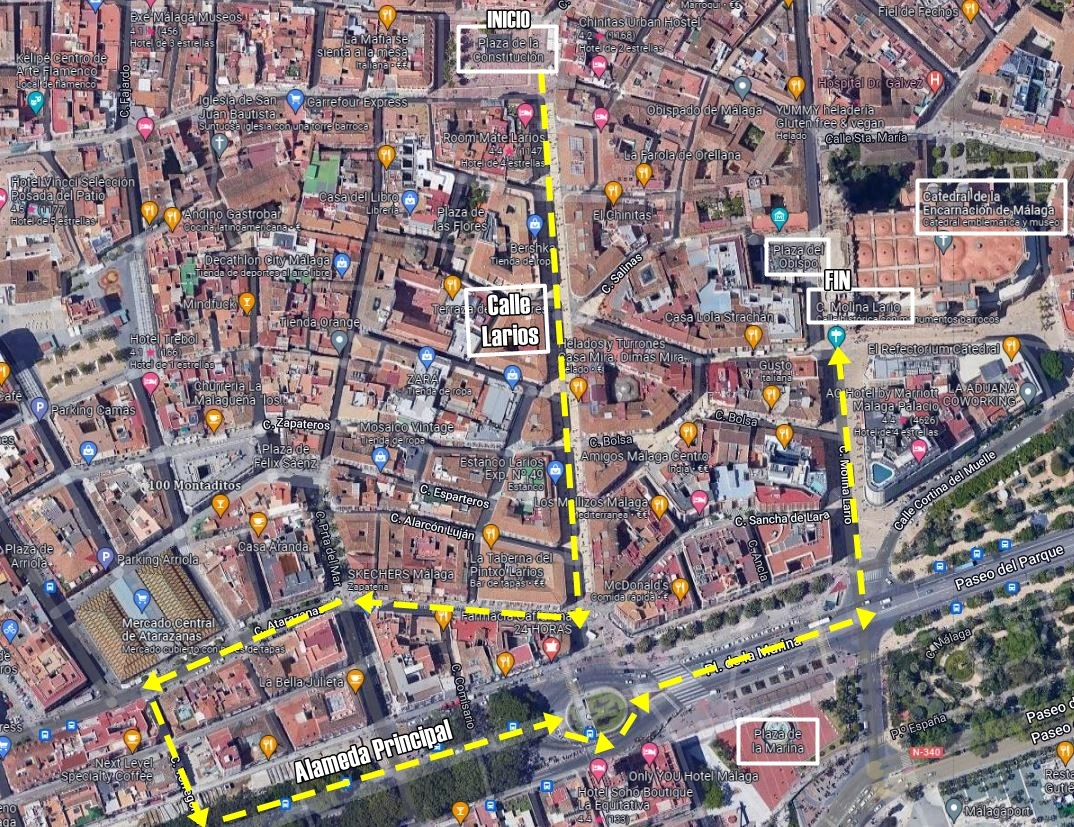
Holy Week Route in Málaga 2027
First of all, it is important to clarify how the routes of the different brotherhoods and processions work in Málaga, as they differ from those in other cities.
- In Málaga, in all cases, without exception, the brotherhoods must cover the route from their departure point (brotherhood house, church or tinglao) to the so-called official Holy Week route of Málaga.
- This official route runs through the main streets of the city centre and is where the paid seating areas are located, including chairs and the official grandstand, totalling 24,000 paid seats.
- The return route of each procession, after completing the official route, is usually different from the outgoing one, but all of them end at the same point where the penitential procession begins, in most cases, their brotherhood house.
Official Holy Week Route in Málaga
Each brotherhood departs from its brotherhood house / church / tinglao and heads towards the official Holy Week route of Málaga, which is made up of the following points:
- Start of the official route: Plaza de la Constitución
- Larios Street
- Martínez, Central Market – Atarazanas, and Torregorda
- Alameda Principal
- Plaza de la Marina
- End of the official route: Molina Lario
At the foot of the Cathedral, at the junction with Molina Lario and the Bishop’s Palace, the official route comes to an end, with each brotherhood choosing the return route that best suits them.
Tips to Enjoy Holy Week in Málaga
If this is your first time visiting Holy Week in Málaga, these tips will be very useful; if you are returning, it never hurts to remember them, and if you are from Málaga, do not forget them.
How should I behave during Holy Week processions in Málaga?
- Ideally, do not cross through the middle of a procession, and if you must do so, keep your distance from the participants.
- It is recommended to remain silent when the thrones pass by, regardless of whether the band is playing or not.
- Maximum silence should be observed during the following processions:
- Christ of Forgiveness – Dolores del Puente
- Expiración
- Santa Cruz
- Vera Cruz
- Dolores de San Juan
- Sepulcro
- Servitas
Where to watch Holy Week processions in Málaga?
This is one of the key questions for anyone visiting Málaga for the first time during Holy Week: how and where to watch the processions in the streets.
The first step is to get an itinerary with all schedules and processions. Below you will find the Holy Week itineraries in Málaga organised by day. You can also download the complete version in PDF.
However, if you do not have a Holy Week seating pass (chairs or grandstands), you will need to follow the processions through the streets—but don’t worry, I’ll help you find the best spots and times.
Traditions and Customs of Holy Week in Málaga
In Málaga we are unique, and our Holy Week is unlike any other. We use our own terminology and there are many peculiarities you should know to fully understand it.
We also have a special vocabulary. Check out typical Málaga words and expressions.
Thrones
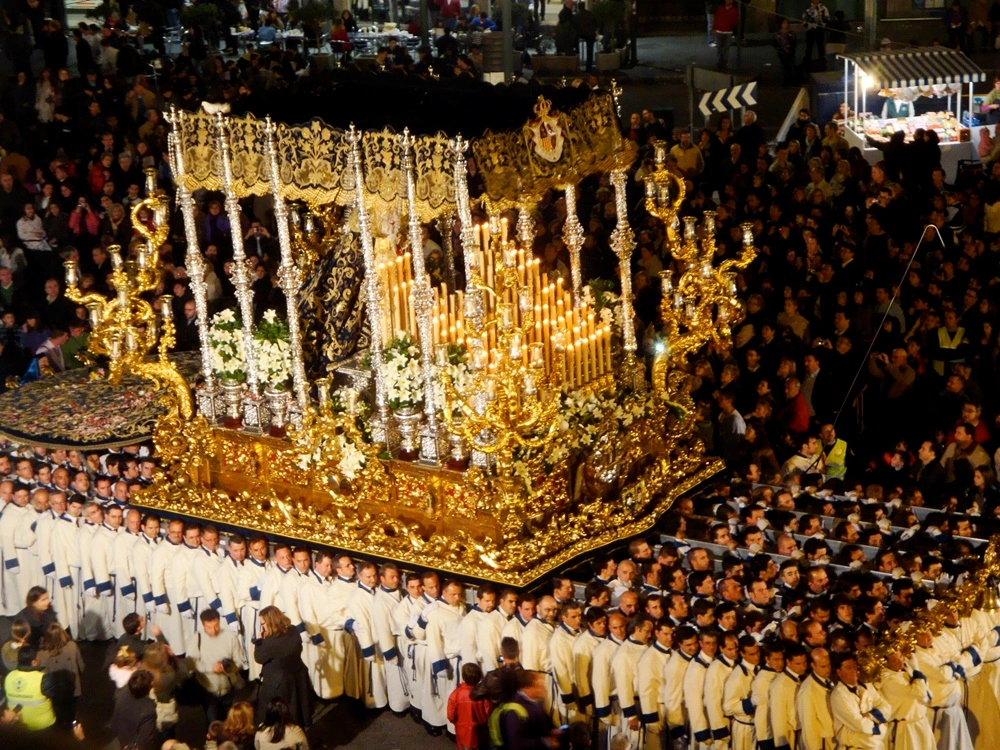
In Málaga we do not have “pasos” like in Seville; instead, they are called thrones. Typically, a procession consists of two thrones: one for Christ and one for the Virgin. However, some processions have only one throne, such as Servitas on Good Friday, while others have up to five, like Fusionadas on Holy Wednesday.
Thrones usually have four, six or eight carrying poles, depending on their size and design.
To give some context regarding their size and weight: the throne of the Virgin of Hope weighs 5,700 kg, making it the heaviest throne in Spain. It is nearly 6 metres tall (5.85 m), almost the same in depth, and nearly 4 metres wide (3.85 m). It is carried by 257 people!
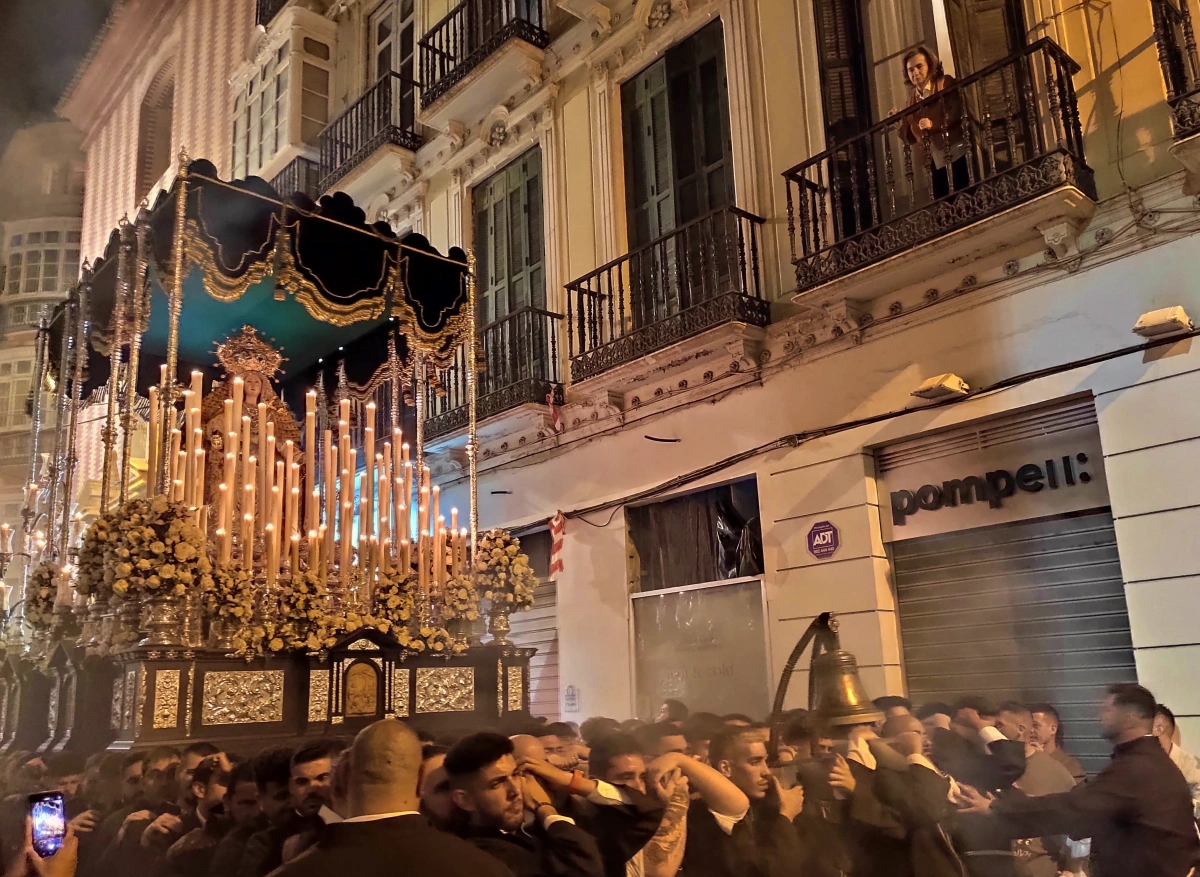
Throne bearers
The people who carry the thrones are called throne bearers (men and women), and they carry the throne on their shoulders (not on the neck), as the name suggests.
The average weight carried by a throne bearer is around 20 kilograms, sometimes even more.
- The Christ throne with the highest number of bearers (260) is the Christ of the Good Death (Mena), which processes on Holy Thursday.
- The Virgin’s throne with the most bearers (280) is Mary Most Holy of La Paloma, which processes on Holy Wednesday.
- This is one of the most spectacular thrones of Holy Week in Málaga due to its enormous size and weight of 3,900 kg.
Processions.
In general terms, we can define the processional parade as “processions”. They usually begin with the guiding cross and/or banner, followed by the Nazarenes.
The Nazarenes may carry candles (the most common), crosses, banners, the rule book, and other items belonging to the brotherhood. They usually wear a tunic, capirote (pointed hood), and gloves.
The brotherhood with the highest number of Nazarenes is Estudiantes, which processes on Holy Monday with more than 1,000 Nazarenes.
Each Nazarene’s attire, as well as the use of a cape, is defined by the brotherhood to which they belong, personalising colours, type of capirote, insignia, and other elements.
Stewards and foremen.
Other key figures in the processions are the throne stewards and the foremen:
- Throne stewards
- They set the rhythm of the throne according to the bell signals. As a general rule, two consecutive bell rings (attention) followed by a slower one indicate raising or lowering the throne. Three consecutive rings followed by a slower one signal lifting the throne “a pulso” (in a single coordinated effort).
- Foremen
- They are the people who give the orders for the movement of the throne. There are usually four foremen per throne (one at each corner), although this number varies depending on the brotherhood.
Tribuna de los Pobres (Tribune of the Poor).
Located at the beginning of Carretería Street, at the junction with Pasillo de Santa Isabel, this is a set of steps made up of 16 steps, considered the “unofficial” tribune of Málaga’s Holy Week, as a large number of thrones pass by.
Likewise, in the surroundings of Carretería Street there are “unofficial” chairs (and even armchairs), which allow spectators to watch many of the thrones.
If you are looking for an authentic spot to feel the popular fervour and also enjoy a top-down view of the thrones, this is the place for you—although you will need to arrive early to try to secure a spot (standing; sitting will be almost impossible).
Which brotherhoods can I see at the Tribuna de los Pobres in Málaga?
After several years of construction works, the brotherhoods are finally returning to Carretería Street and the Tribuna de los Pobres. This is one of the highlight points of the route, although finding a spot requires a lot of time and patience.
A total of 15 brotherhoods will pass through the Tribuna de los Pobres this Holy Week. Here is the complete list by day:
Palm Sunday.
- MARÍA SANTÍSIMA DE LÁGRIMAS Y FAVORES.
- SALUTACIÓN.
- PRENDIMIENTO.
Holy Monday.
- ESTUDIANTES.
Holy Tuesday.
- ROCÍO.
- NUEVA ESPERANZA.
- RESCATE.
- SENTENCIA.
Holy Wednesday.
- REALES COFRADÍAS FUSIONADAS.
- LA PALOMA.
- LA SANGRE.
Maundy Thursday.
- LA CENA AND MARÍA SANTÍSIMA DE LA PAZ.
- VIÑEROS.
- ZAMARRILLA.
Good Friday.
- LA PIEDAD.
Frequently Asked Questions about Holy Week in Málaga
If this is your first time attending Holy Week in Málaga, in addition to the above vocabulary, you will need a few recommendations so you don’t feel lost among the crowds and the many changes in the city.
How to get around Málaga city centre?
- Avoid approaching the official route, as you won’t see much and some streets (Especerías, Cisneros, Fajardo) are capacity-controlled.
- There are designated crossings to move from one side of the official route to the other, but they take quite a long time.
- Another option is to take a longer detour, for example via Ordóñez Street or Plaza Uncibay.
- Keep track of the brotherhoods’ passage through the Cathedral and avoid the area at that time, as movement becomes very difficult.
- On the first day, Palm Sunday, there are always large crowds in the streets, so patience is essential.
- The other busiest day is Maundy Thursday, with the procession of the Legionnaires accompanying the Cristo de Mena and the Virgin of Hope.
Where to park during Holy Week in Málaga?
My first piece of advice is to forget about the car. Leave it as far away as possible and use Málaga’s public transport.
- If you still decide to use your car, you must carefully check the schedules and streets used by the processions, as you may get stuck in a street or car park in the city centre for hours.
- Public car parks remain open (24 hours), but they may be blocked by a procession, and parking in the city centre is almost impossible.
Málaga Metro: the best option for Holy Week.
In addition to bus transport options, the metro becomes the best way to reach the city centre thanks to the opening of two new stations: Guadalmedina and Atarazanas.
Walking and eating.
To move around the city centre and follow the different processions, you will need to walk—quite a lot—and look for places to rest or eat, always with patience due to the crowds. These days can be challenging, but here are some recommendations, such as my classic tapas route in Málaga’s city centre.
Where to stay for Holy Week in Málaga?
As for accommodation, the best option is to consult our article dedicated to where to stay in Málaga. A good choice is staying around Vialia, Carretera de Cádiz, or Huelin. Another option is treating yourself and staying in one of Málaga’s 5-star hotels, which offer spectacular views.
- Finding accommodation in Málaga for Holy Week is perhaps the most difficult task, especially if left until the last minute.
- It is estimated that prices increase by 2–3 times the usual cost during Holy Week and the Málaga Fair.
Weather in Málaga during Holy Week.
We like to say (and rightly so) that Málaga has one of the best climates in Europe, which helps ensure that the weather during Holy Week is usually very pleasant.
However, since this year it takes place at the end of March, it is difficult to predict exactly what the weather will be like. Still, we can say that temperatures will be around 10–15°C at night and may reach 20–25°C during the day under normal conditions.
As the processions take place in the afternoon and evening, some lasting well into the early morning hours, my advice is always to bring a jacket or coat and wear comfortable shoes.
The only real issue during Holy Week is rain, so it is essential to closely monitor the forecast up to hours before each procession. The brotherhoods cannot risk damaging their heritage or the sculptures, some of which are hundreds of years old.
In the event of rain or a high probability of rainfall, each brotherhood will decide whether or not to proceed with the procession.
Te puede interesar:

Christmas in Málaga 2026: Lights, Nativity Scenes…
GUIDE to MALAGA FAIR 2024
Christmas Lights in Málaga 2025 | Complete Guide,…
MALAGA CHRISTMAS Lights 2023: DATES and SCHEDULES
Bus Malaga to Torremolinos (M-110): Schedules and Prices
Christmas in Torremolinos 2025: Lighting Ceremony,…
Bus Malaga to Fuengirola(M-113): Schedules and Prices

- Top 5 Best Flamenco Shows in Malaga - 1 June, 2023
- Christmas in Malaga 2022. What to do and see - 2 December, 2022
- Top 10 Restaurants in Malaga to eat recommended by a local - 18 November, 2022